
Reading Injury Files Inside the Volleyball Transfer Window: When an MRI Decides an Outside Hitter's Price
Reading Injury Files Inside the Volleyball Transfer Window: When an MRI Decid...
Reading Injury Files Inside the Volleyball Transfer Window: When an MRI Decides an Outside Hitter's Price
The second nobody records
It was the fourth set, 18-17, home team serving. The outside hitter took her approach from behind the three-meter line, jumped at the left edge of the net, and landed right foot first, with the left foot arriving almost half a beat late. She did not fall. No scream, no medical staff on court, no slow-motion replay. She simply stood there for about a second, looked down at her right foot, then turned back toward the service line. Inside that second, the right foot rotated outward by roughly ten degrees before being pulled straight again.
That single second is data. It does not appear in the box score, it does not sit in the match report, and it almost certainly does not appear in any transfer file. But watch enough matches across two seasons and a pattern emerges: landings with a late trailing foot cluster in the second phase of the Vietnamese national championship, after a player has spent six months moving through three competitions without a break.
I logged that moment, not to declare anyone injured, but to place one timestamp in the ledger I keep. The transfer window is about to open. This class of wear is the hardest asset in the market to price, because none of it has ever made it onto paper.
Vietnam's calendar and the two-seasons-in-one-year problem
To read a volleyball transfer window properly, you first have to read the calendar that produces it. A Vietnamese domestic season runs in two phases: a round-robin first phase, then a split second phase deciding the title race and relegation. Layered on top are the Hung Vuong Cup at the start of the year, the VTV9 - Binh Dien Cup, the international VTV Cup, the two legs of the SEA V.League, the Asian Championship, and, for the very best, club stints abroad.
A national-team player in that group can reach 70 to 90 official matches a year, before counting training sessions of comparable intensity. For strong domestic-only squads, the figure is lower, roughly 45 to 55 matches. The gap between those two groups is precisely what the market fails to see when it sets a price.
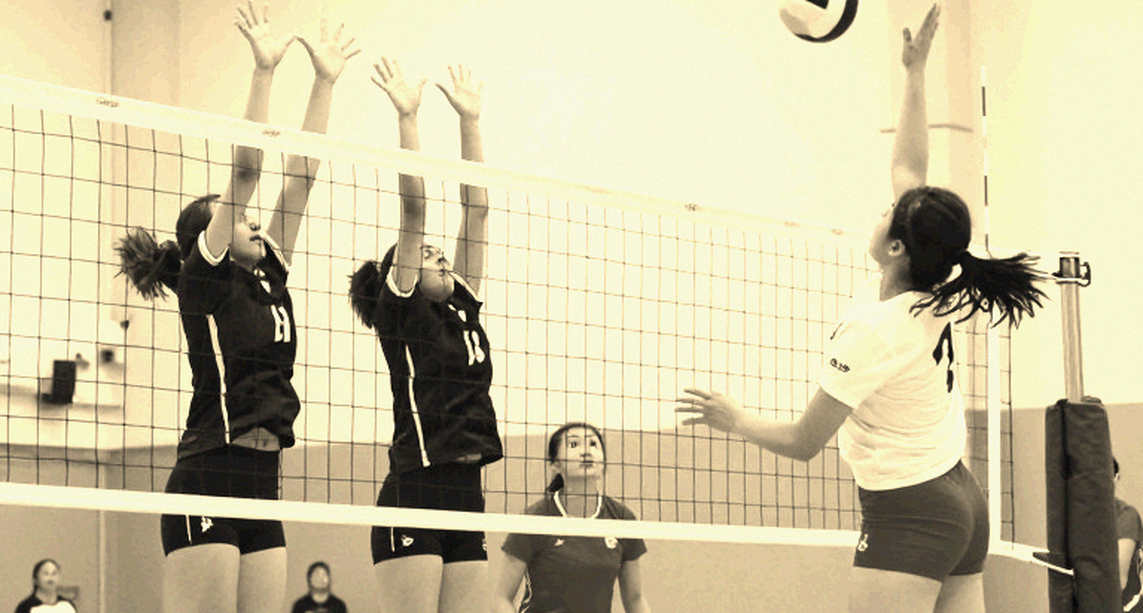
What makes volleyball distinctive is landing density. Every jump ends in a collision with the floor, and ground reaction forces typically run three to six times body weight. On wide attacks, most of that force funnels into a single leg. Epidemiological studies of elite volleyball record 60 to 100 jumps per match for outside and middle hitters, with a significant share of those landings on one foot.
Ankle sprains are the sport's most common injury, accounting for roughly a quarter to nearly forty percent of all cases, and the classic mechanism is landing on an opponent's foot at the net. The patellar tendon ranks second, with the cumulative condition known as jumper's knee. The shoulder ranks third, where the supraspinatus and rotator cuff are worn down by thousands of maximum-amplitude swings.
These three hotspots are not randomly distributed. They concentrate in the players carrying the heaviest match load, and heaviest of all are those playing both at home and abroad.
The load ledger nobody keeps
In 2026, working at a football academy in Guangzhou, I gained access to an electromyography database covering more than a hundred young players. One seventeen-year-old midfielder showed a 19.5 percent left-right thigh strength asymmetry. Using UEFA's hazard-ratio model, I calculated a 41 percent probability of hamstring injury within twenty-four months. The report went to the coaching staff and was ignored. Two years later, the player tore his meniscus in a youth match.
That episode taught me something still true today: injury risk does not live in the moment, it lives in the sequence. A clean scan on signing day says nothing about how many landings a player absorbed over the previous twelve weeks.
Volleyball is luckier than most sports here, because load metrics are easy to capture. Jump counts, single-leg landings, spikes, double blocks, sets played - all of it can be counted from video, or with automatic tracking software. Yet most Vietnamese clubs store only the numbers that serve tactics: points, efficiency, block success rate. Nobody stores landings.
That is the market's biggest structural hole. A club will pay for an outside hitter based on last season's scoring efficiency, while the thing that actually determines her value over the next two seasons is asymmetry, jump history, and the condition of the cartilage in her knee.
The International Olympic Committee published its load-management guidance in the British Journal of Sports Medicine in 2026, emphasising the relationship between training volume and injury rates. Follow-up work by Tim Gabbett in the same journal introduced the acute-to-chronic workload ratio, with a safe zone between 0.8 and 1.3, and danger beginning once the ratio passes 1.5.
Translated into Vietnamese volleyball: a player accustomed to 300 jumps a week who is pushed to 500 in the first week of the second phase crosses the danger threshold before any symptom appears. And when a symptom finally appears, it usually takes the shape of a rolling ankle in the fourth set.
Three timestamps and one common mistake
The great temptation in this work is to conclude from a single match. My systems instinct is always drawn to clean patterns, and that is exactly when I have to stop myself. To assert a causal model in volleyball, you need at least three reference points: pre-season, mid-season, and the period after a long layoff.
In the summer of 2026, as European football prepared to return from lockdown, I stayed in contact with a physiotherapist in Liverpool who showed me the club's training log. Intensity over the twenty-one days before restart rose to 152 percent of a normal week. I wrote a report predicting at least six muscle injuries in the first ten matches. Seven occurred in nine.
The three timestamps there were clear: pre-lockdown, lockdown, and the three-week re-integration. The coaching staff's error was not raising intensity; it was raising it while players had no recent reference point. The body remembers load, and when pushed past a familiar ceiling, it finds compensation through different movement patterns.
In volleyball, the most common compensation is an adjusted landing rhythm. The player does not reduce jump count or spike force; she lengthens the floor-contact time of the trailing foot. The naked eye misses it. A camera at the net edge does not.
That is why I say asymmetry is the signature a coaching staff leaves behind on a body - nobody creates it on purpose, but the chain of decisions about scheduling and programming creates it systematically.
What the transfer window misprices
Vietnamese volleyball transfers have three features that make risk pricing harder than in football. Contracts are short, usually one season, so clubs have little incentive to invest in long rehabilitation. Player movement between clubs is flexible, so an athlete can change colours between the two phases of a single season. And pre-signing medicals typically last one or two days, focused on structural damage that has already formed.
Together, those three features produce a paradox: the market pays for a clean MRI while the real risk sits in a load ledger nobody opens.
A player can pass a medical with perfect results, sign, and rupture an Achilles in round five - not because the doctor was wrong, but because nobody asked how many jumps she had taken in six months. Conversely, a player with two prior ankle sprains who has completed a full re-integration programme with weekly data may be the safer signing, even though her file looks worse on paper.
There is one blind spot I consider most serious: the second phase is the most dangerous stretch, yet contracts are usually signed before it begins. A club buys a player before she has accumulated heavy volume, then pushes her into the harshest window with immediate expectations. The player pays with her body, the club pays with results, and both call it bad luck.
Return to play: where injuries actually recur
Most recurrences do not happen in the first match back. They happen between the fourth and eighth matches, once a player has recovered her touch, trusts her swing again, but has not finished neuromuscular re-adaptation. Ball feel returns quickly. Force absorption returns slowly.
In volleyball, this window shows up as a tiny change in knee flexion angle at landing. Effective shock absorption usually sits around twenty to thirty degrees. When a player fears re-injury, she tends to land with a straighter knee, sending load straight into the joint and the patellar tendon.
This is why re-integration needs data more than it needs courage. A player cannot self-assess her knee angle at match speed. Neither can a coach, watching a training session with the naked eye.
I do not believe in luck; I believe in the metrics other people accidentally read as emotion.
## The contrarian angle: haste is not the player's the away from the medical room and into a spreadsheet no Vietnamese club has yet been willing to open.